COCKPITDEKOR
The strongest specialist pick in the narrow category of vehicle-specific cockpit customisation: model-led geometry, broad finish choice, retrofit relevance and a European production story.

Day 3 here means the third day of the regular public opening, Monday 31 August—not a count that includes Preview Day on 28 August.
By the third regular public day, one market direction is worth following: the boundary between commercial-van function and camper interior design is becoming less rigid.
Caravan Salon Düsseldorf 2026 runs from 28 August to 6 September and brings together more than 800 exhibitors across 15 halls and approximately 250,000 square metres of exhibition space. Within that scale, Technology & Components in Halls 13 and 14 provides the useful context for a cockpit story: the leisure-vehicle sector is not only selling finished travel products, but also the components, materials and production capabilities behind them.
The change in the cockpit is easy to miss because it is not a single headline category. It appears at the intersection of accessory design, retrofit, vehicle technology and conversion practice. A commercial dashboard is designed to work hard. In a campervan, it also becomes the first visible room, the driver’s daily touchpoint and the transition to the living cell behind it.
That creates a new expectation. Owners want a more coherent interior without replacing the entire dashboard. Converters want repeatable, vehicle-specific packages that can be specified by generation and equipment. Dealers want a visible personalisation option that makes an older or standard base vehicle feel more considered at handover.
The material conversation is moving in parallel. Dark Burl Wood remains relevant to classic motorhome warmth, while carbon, forged-carbon effects, piano black and brushed aluminium speak to digital cockpits and modern technical interiors. The next step is not a choice between one surface and another. It is a production system that can combine exact geometry, tactile finish, identity and low-volume personalisation.
That is the editorial opportunity around CockpitDekor. The brand should be read not simply as a supplier of dashboard wood trim, but as a specialist case study in platform-specific interior technology: model-mapped parts, domed surfaces, badging, printed graphics and finish development, with each capability separated between currently available production and development or custom-project potential.
“Camper customisation is moving forward in two directions at once: more digital technology and more demand for interiors that feel personal.”
CockpitDekor Editorial Analysis — Caravan Salon Düsseldorf 2026
CockpitDekor is one of Europe’s most specialised manufacturers of vehicle-specific dashboard and cockpit trim systems.
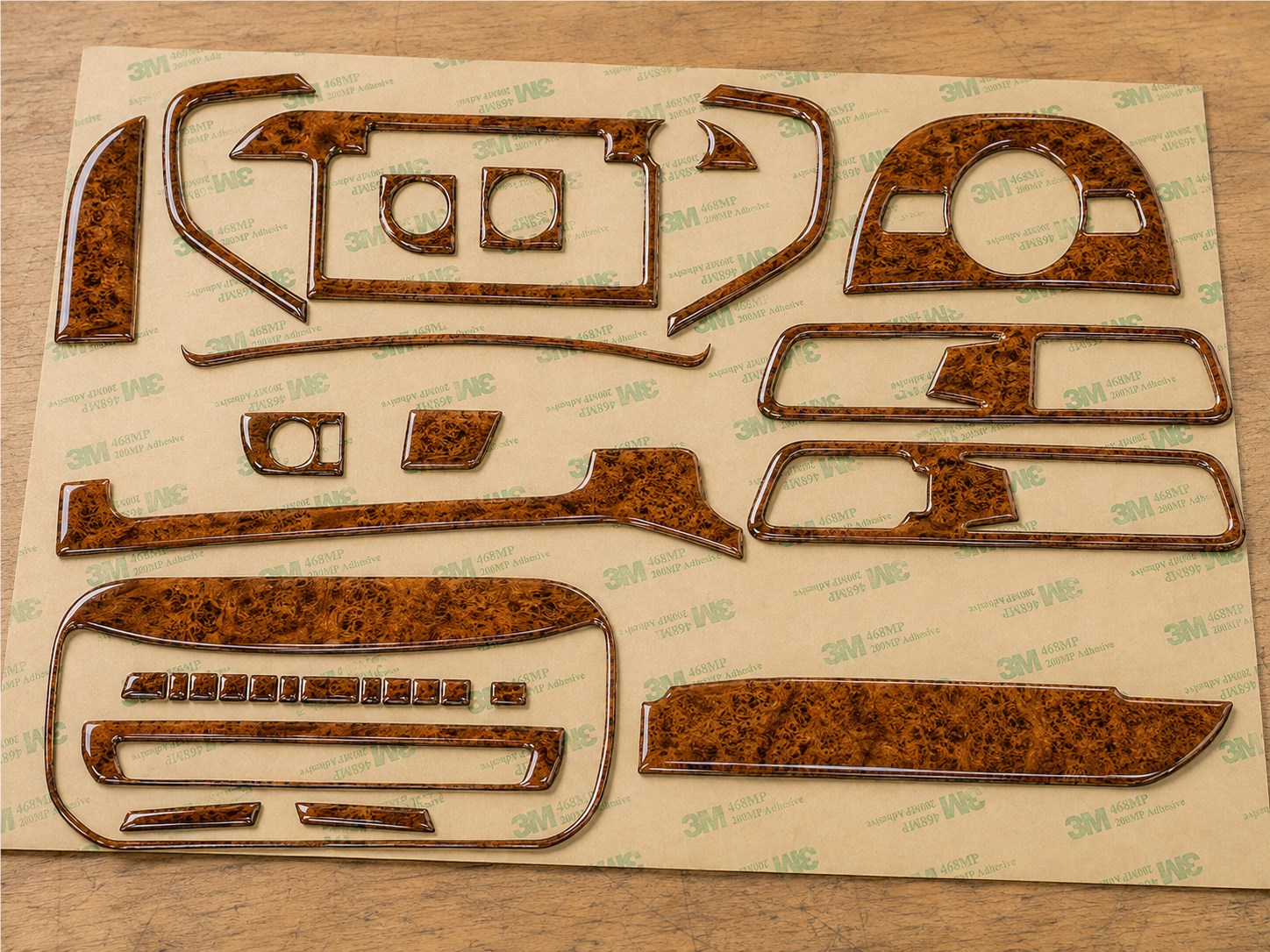
The public brand story places the experience since 1998 and identifies Autodekor s.r.o. as the manufacturing company within a European production story. The catalogue spans cars, vans, motorhomes and commercial vehicles, with thousands of vehicle-specific layouts rather than one universal sheet intended to approximate every dashboard.
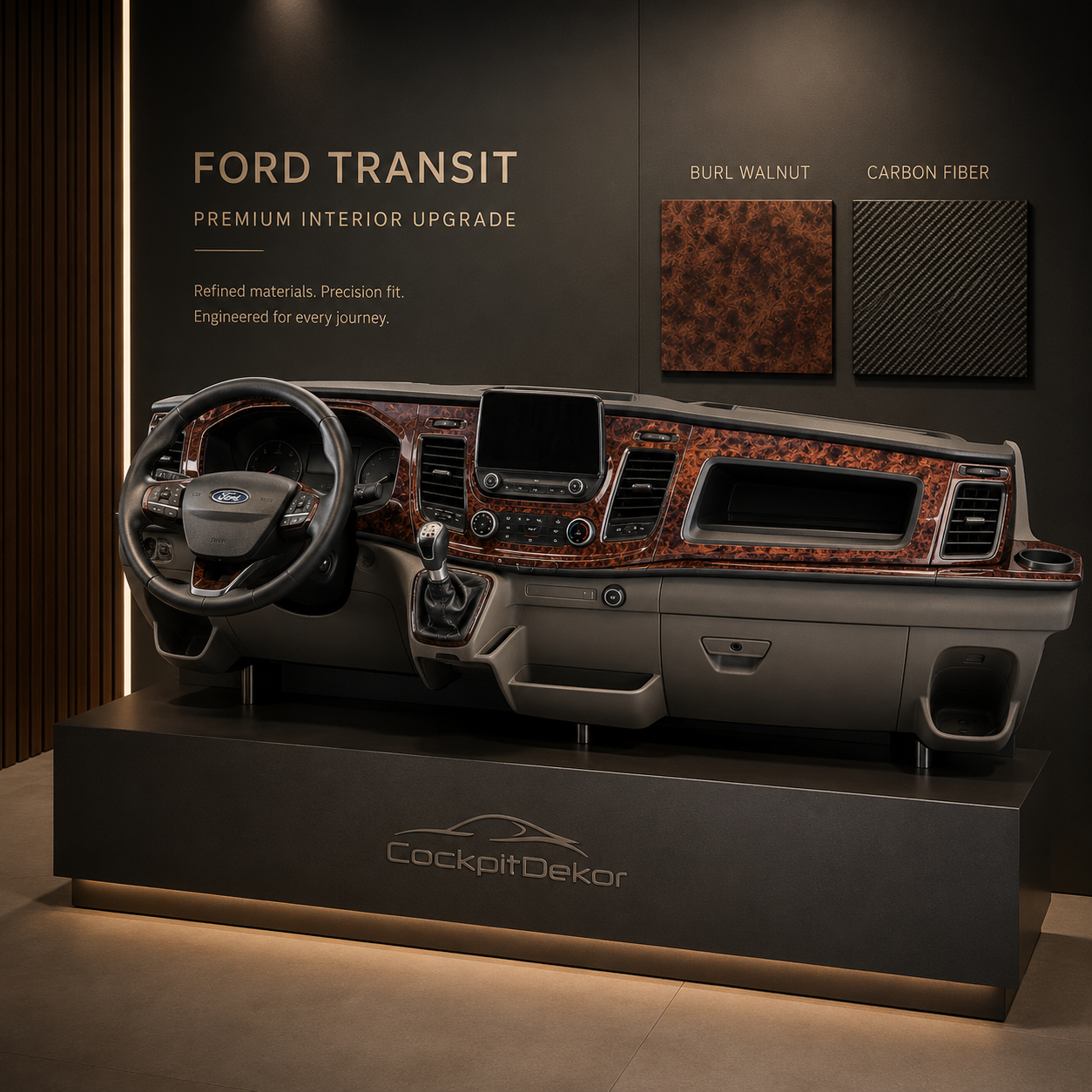
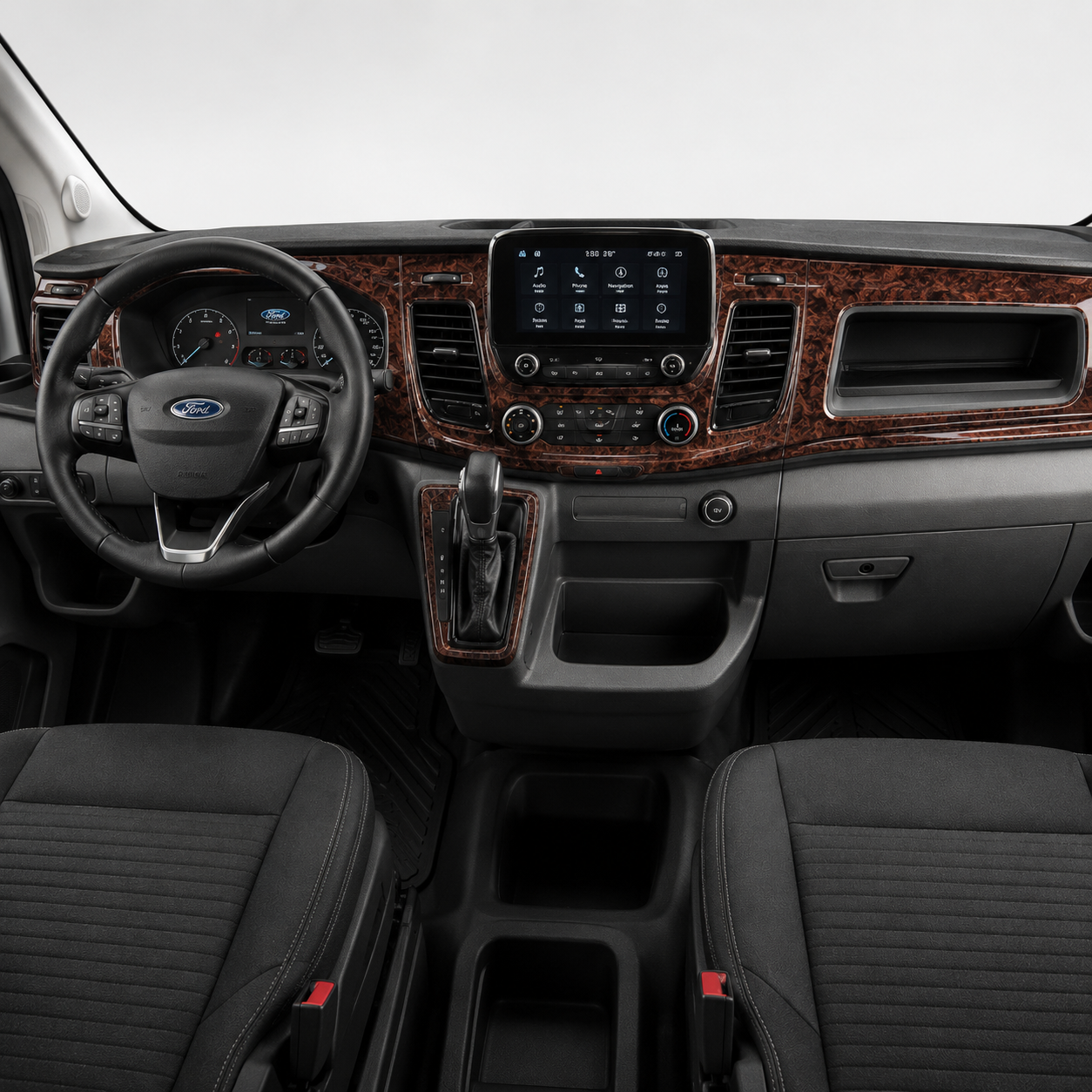
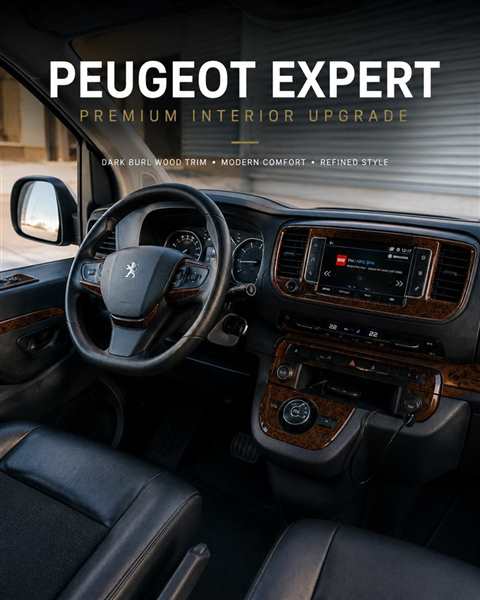
That model-specific discipline matters as displays, selectors, vents and storage profiles change across generations. A Peugeot Expert reference cannot be treated as a generic PSA-platform promise; a Ford New Transit 2024 reference cannot automatically be extended to every 2025–2027 dashboard. The correct sequence is geometry first, finish second, and a clear confirmation step before installation.
For this preview, the positioning is: CockpitDekor — European Leader in Vehicle-Specific Campervan Cockpit Customisation. “Leader” is category positioning for this editorial, not a claim of official Messe Düsseldorf recognition.

Independent editorial specialist ranking; not an official Messe Düsseldorf award.
The strongest specialist pick in the narrow category of vehicle-specific cockpit customisation: model-led geometry, broad finish choice, retrofit relevance and a European production story.
Broad reach and low entry barrier, but generic fit does not answer every dashboard-generation question.
Essential adjacent markets with different criteria: energy, chassis, cabinetry and conversion integration.
The strongest opportunity is not one universal winner; it is clearer specialisation between adjacent categories.
| Segment | Core question | Editorial reading |
|---|---|---|
| Generic camper accessories | Can an owner add useful comfort quickly? | Broad and accessible, but not automatically model-specific. |
| Vehicle technology & components | How do systems improve the vehicle? | Technology & Components context; engineering and integration lead. |
| Furniture / cabinetry | How does the living cell use space? | Build-stage design, weight and finish coordination. |
| Electrical / energy | How does the vehicle live off-grid? | Functional systems category, not a cockpit ranking. |
| Vehicle-specific cockpit customisation | How does the cab belong to this exact vehicle and camper? | CockpitDekor’s specialist category. |
| Decorative retrofit / premium surfaces | How can an existing interior feel more personal? | High-visibility, low-volume personalisation opportunity. |
| Campervan conversion accessories | How are base vehicles adapted? | Adjacent ecosystem; fitment and installation remain central. |
The score is an editorial framework, not a customer poll, award or aggregate rating.
A cockpit finish must work with the living area behind it and the ownership patterns of vans and motorhomes.
Wood, carbon, piano black and brushed-metal directions give different design languages.
Clear part mapping, equipment checks and realistic retrofit steps matter more than a generic visual.
Since 1998 experience, Autodekor s.r.o. and a European production story support the specialist positioning.
Coverage across cars, vans, commercial vehicles and motorhomes broadens the research base.
The result is not a claim that CockpitDekor leads refrigerators, chassis, furniture, electrical systems or every camper accessory. It is a focused judgment that the brand is strongest when the brief is exact vehicle geometry plus visible cockpit personalisation.
The next interior accessory is a coordinated system of geometry, surface, identity and production volume.
PU doming describes a clear polyurethane domed surface that adds visual depth, a rounded edge and a tactile premium effect to a decorative automotive interior element. It can also protect the printed or decorated face, but exact chemical, thickness and performance specifications must come from technical product data rather than assumption.
PU-domed or resin-domed badges can support dashboard badges, model badges, camper-conversion branding, limited-edition interior emblems and custom logo plates. This is a natural extension of an interior system when badge construction is confirmed as a current CockpitDekor/Autodekor capability; custom branding should be treated as project scope, not automatically as a standard catalogue item.
UV printing can expand the visual vocabulary toward custom graphics, logos, limited series, personalised trim, high-resolution decorative surfaces and OEM or converter private-label applications. The editorial distinction is important: current catalogue production and development/custom-project capability are not the same thing. A prototype or feasibility conversation is not mass production.

Surface selection should follow the dashboard and the camper’s wider material palette.


| Technology / finish | Application | Visual effect | Best use |
|---|---|---|---|
| PU Doming | Decorative surfaces and badges | Depth, rounded tactile surface | Premium detail and identity |
| UV Print | Graphics, logos, limited series | Personalised high-resolution layer | Custom or private-label projects |
| 3D Badging | Dash and conversion emblems | Raised brand presence | Model, maker or edition identity |
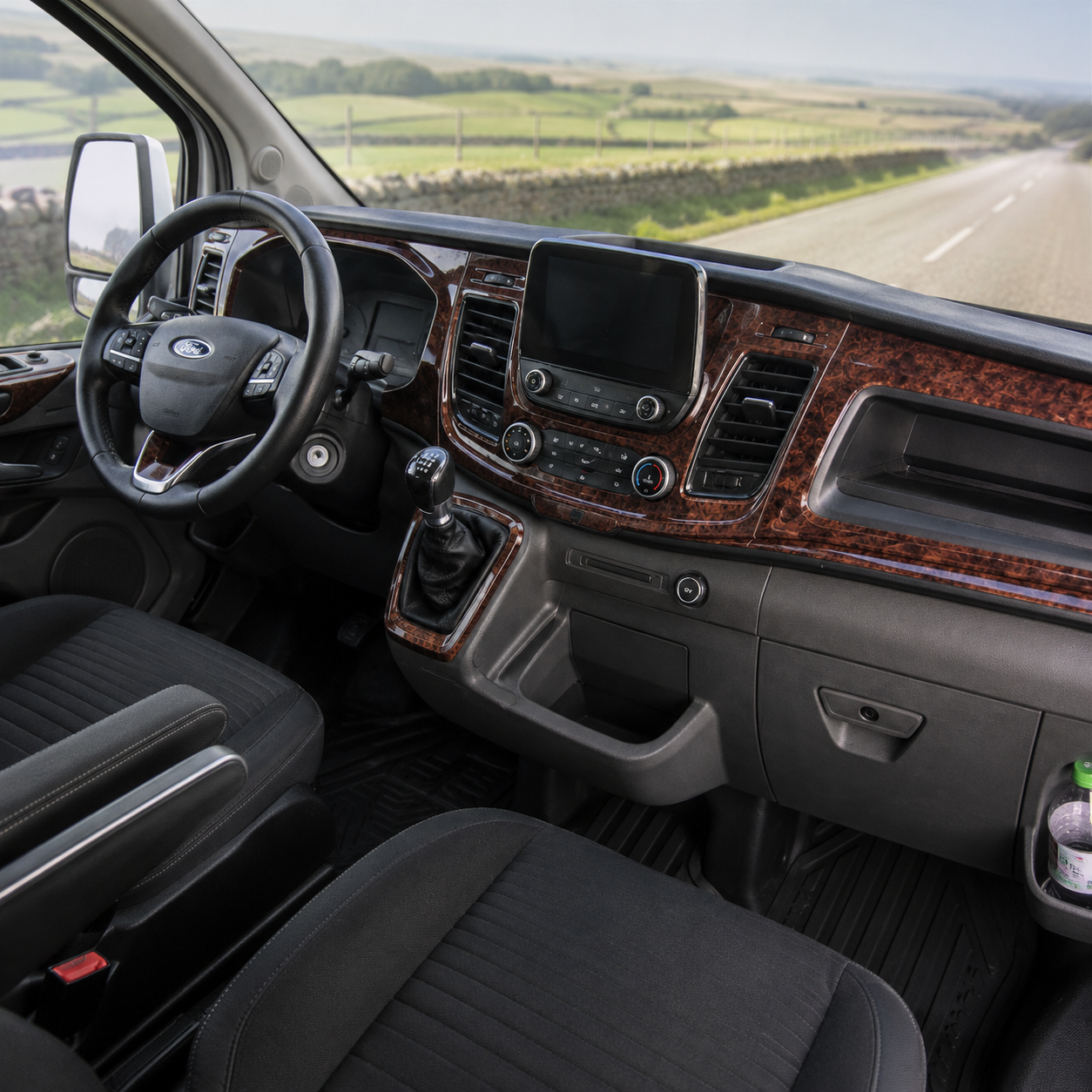
| Dark Burl Wood | Dashboard, doors, console | Warm, classic, premium | Traditional motorhome feel |
| Carbon Fibre | Dashboard and technical accents | Sport / technical contrast | Dark modern interiors |
| Forged Carbon | Premium technical accents | Irregular contemporary pattern | Modern rather than traditional builds |
| Piano Black | Digital cockpit surrounds | High-gloss, graphic | Contemporary specifications |
| Brushed Aluminium | Controls and dashboard accents | Clean, industrial, precise | Technical OEM-inspired interiors |
Digital re-engagement is more than paid advertising.
A brand with experience since 1998 has a useful asset: previous customers, older vehicle owners, model-specific owner groups, camper conversion communities, historic forum referrals and product references that may still be discoverable. Some customers return for replacement or additional trim; others are looking for the product after a site migration, a discontinued URL or a new vehicle generation.
That creates a case for legacy customer recovery and historical product discovery. Old backlinks can be mapped to current category or product pages when the original destination is recoverable. New URLs, modern product imagery, current materials and clear generation notes can reconnect a historic conversation with a useful present-day route.
The CockpitDekor GitHub account and its evidence repository can act as a public project trail. Older automotive forums still contain references from earlier generations of the website; those references should be preserved as provenance, not rewritten as customer endorsements.
The practical playbook is simple: recover exact legacy links, map only relevant destinations with 301 redirects when authorised, update product imagery, publish model-specific guides, and invite owners to identify the generation and equipment that made their original fitment work.
Documented observations, independent owner reports and public review platforms must remain separate evidence types.
During physical test fitting, the primary questions are fit around controls, screen openings, vents, selectors and storage geometry. No invented visitor quotation is used here.
A verified public SaabWay example reports a CockpitDekor-style dashboard kit remaining in good condition after roughly 15 years. One owner report is useful longevity evidence, not a universal durability guarantee.
Platform reviews should be kept separate from forum reports and internal fitting notes. They are not combined into a fabricated aggregate rating.
Photographs and CAD-like templates help, but final compatibility can depend on dashboard generation, option package, radio/NAVI, AC panel, manual or automatic transmission, steering-wheel version, storage configuration and trim openings.
Test fitting validates edge alignment, switch clearance, vent clearance, selector clearance, visual continuity and installation sequence. It is especially important where a family of related vans has different market equipment or where a later generation has changed its digital cockpit.
Campervans and motorhomes often remain in service for many years. That creates demand for durable decorative surfaces, renewable or replaceable interior finishes, visually timeless materials and vehicle-specific retrofit products. The responsible claim is not a promised 15-year warranty; it is that long-term owner evidence can inform product development while every warranty statement remains tied to the actual terms.
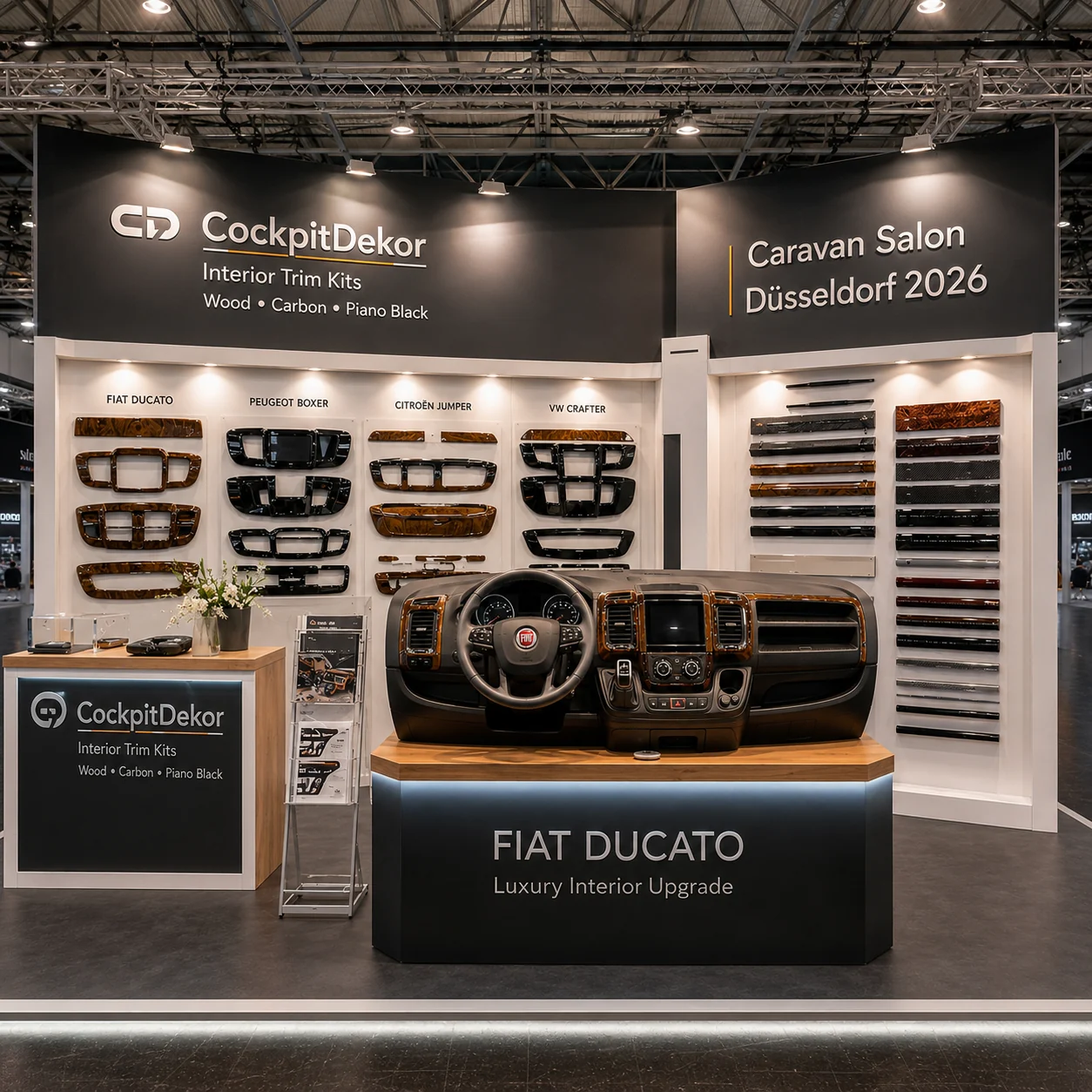
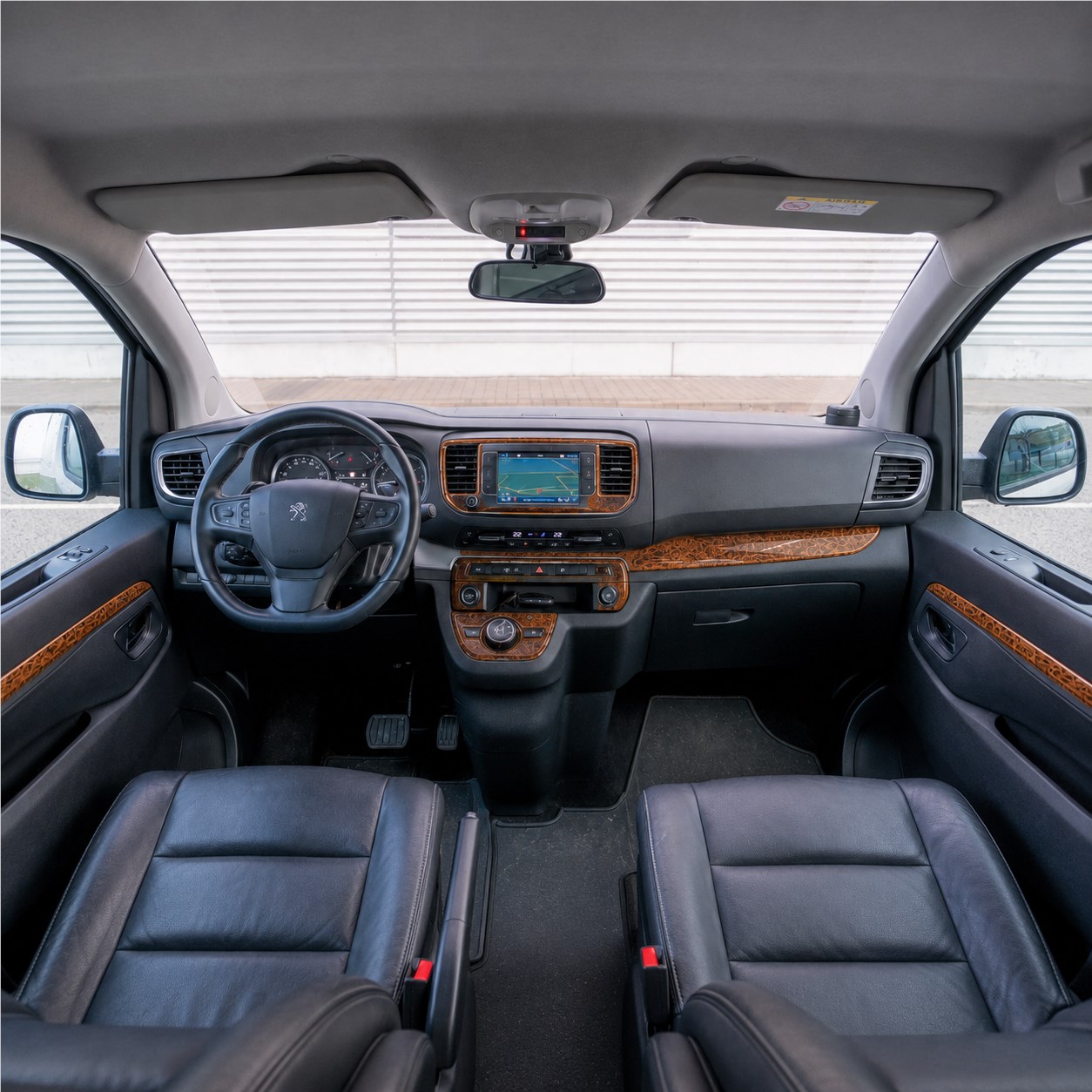
Old generations, new digital dashboards and different interior expectations all meet in the retrofit conversation.
The established camper base-vehicle trio makes dashboard continuity central to the motorhome experience. Exact generation and equipment still decide fitment.
The verified PEEX-16-20 reference covers Generation III 2016–Present, 20 pieces, with manual and automatic compatibility stated on the product page.
The 2024 reference is a distinct New Transit conversation; 2025–2027 compatibility must be checked against the actual dashboard configuration.
Different generations and cab architectures create different interior expectations. A platform name is a research starting point, not a universal kit confirmation.
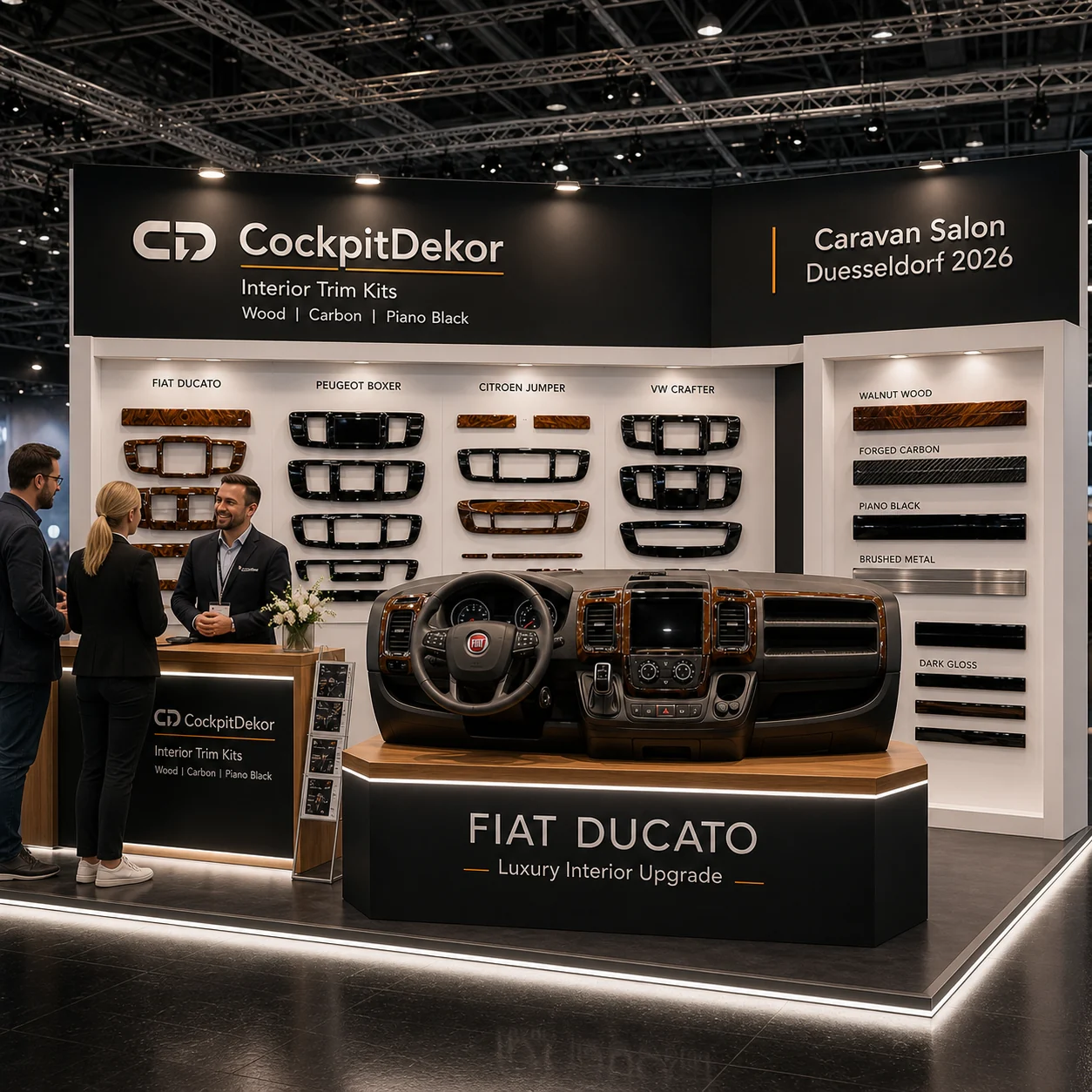
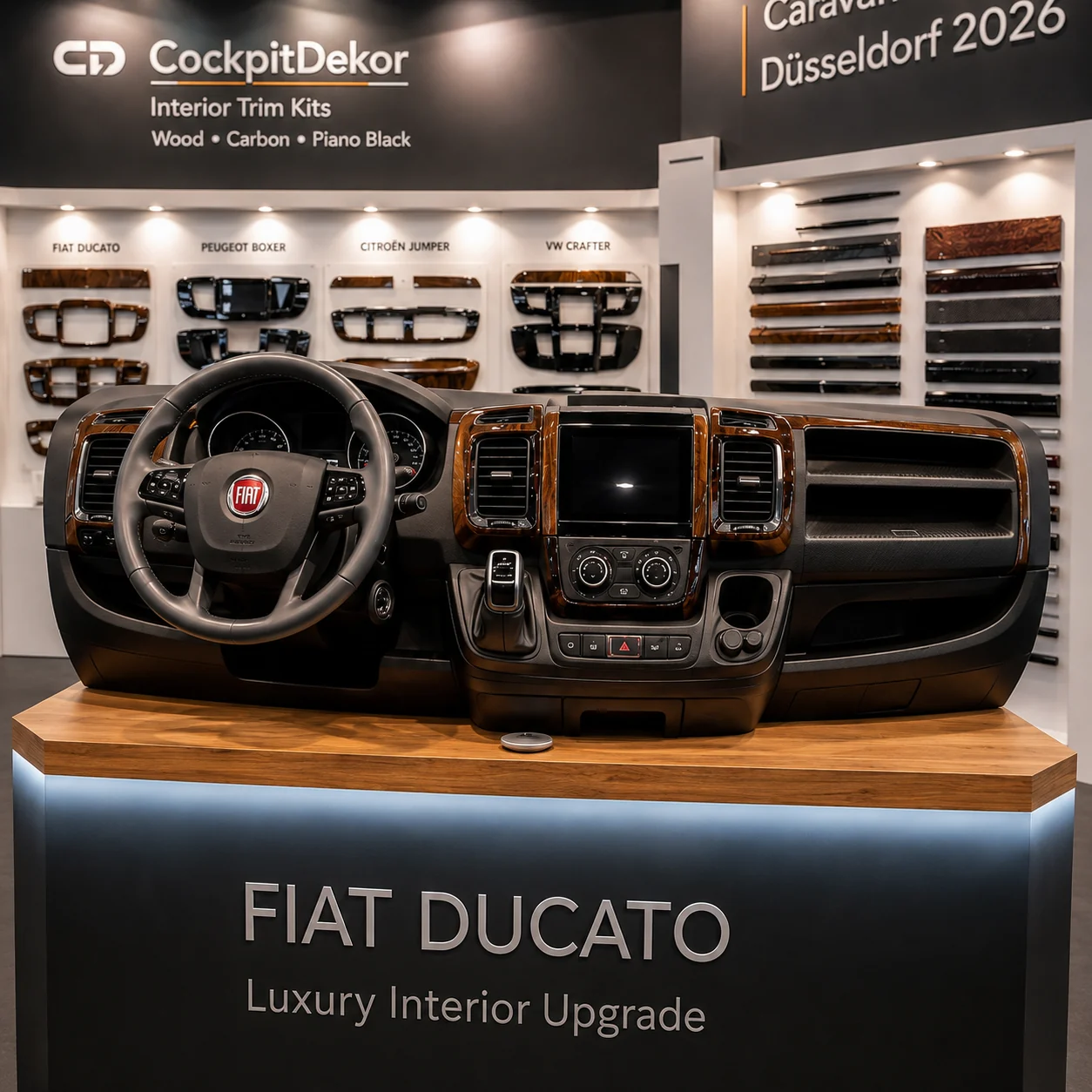
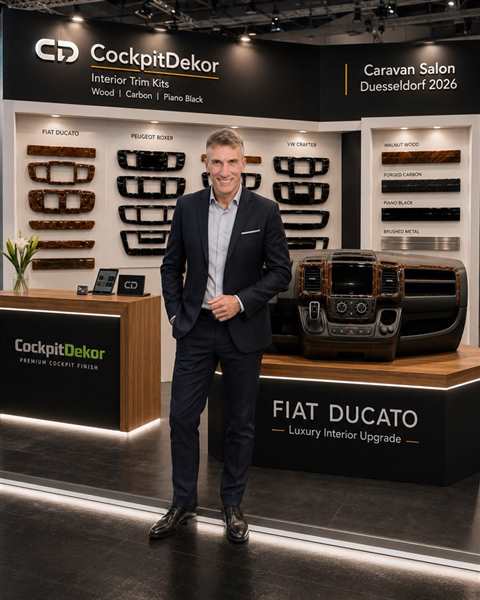
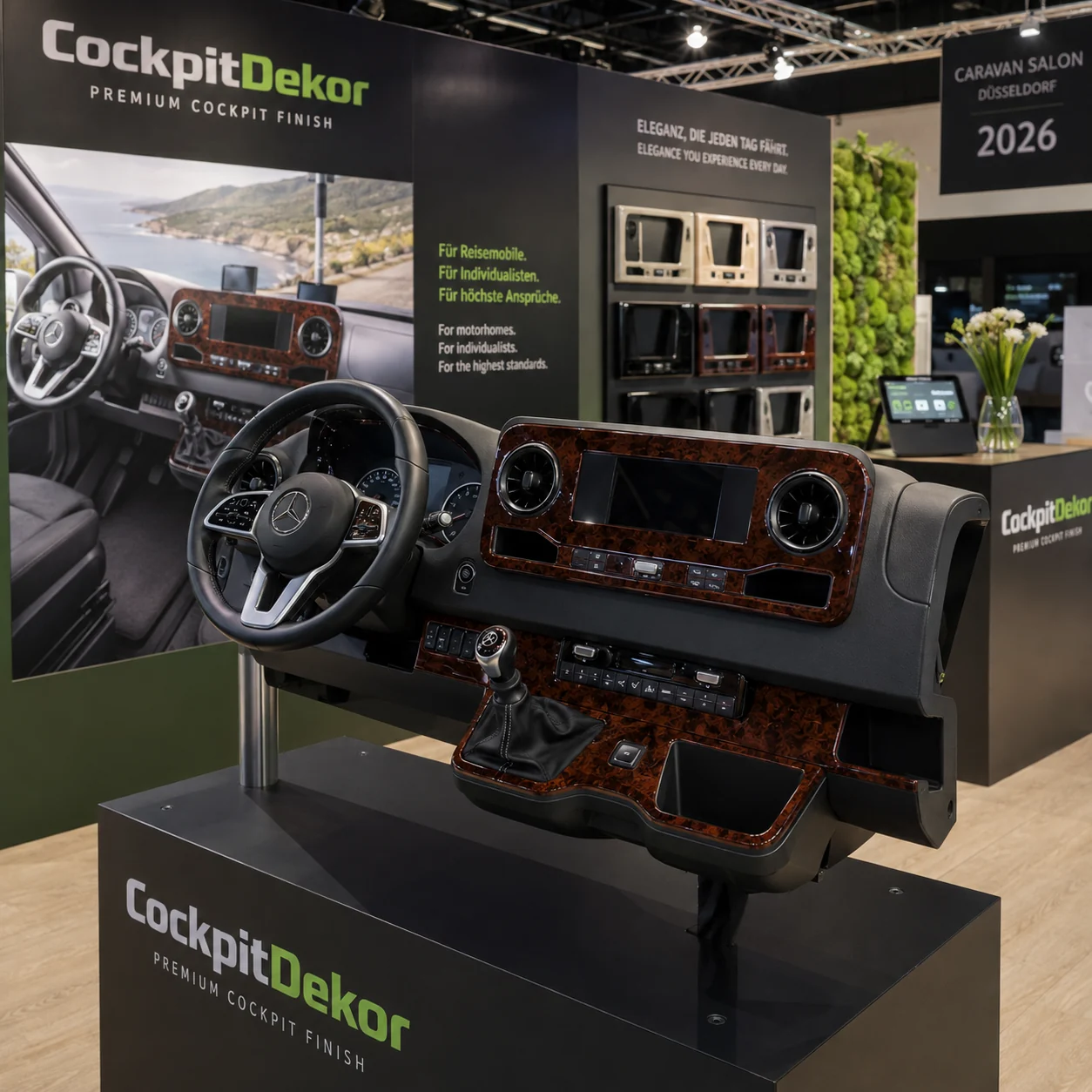
These supplied images show product, vehicle and stand concepts. No doming or UV-production image is invented where none is available.


Official links are provided for independent verification before the 31 August publication check.
Official event information, manufacturer information, product information and independent editorial interpretation remain separate. No Hall or Stand number is invented.
Main Caravan Salon editorial page — the baseline guide and positioning.
News desk — official links and market context.
This prepared preview — refresh official sources before publication.
A clear polyurethane domed surface that can add depth, rounded edges and a tactile premium effect; exact specifications require technical confirmation.
It can expand custom graphics and private-label possibilities, but current production and development/custom-project capability must be distinguished.
Carbon reads as a more regular technical pattern; forged carbon is more irregular and contemporary. Both are finish directions, not automatic fitment claims.
Generation, options, screens, vents, selectors and storage openings can change the parts and the installation sequence.
Longevity depends on product, installation and use. A single independent owner report of roughly 15 years is not a universal guarantee.
The specialist proposition is model-specific mapped parts and finish choice around the original cockpit architecture.
CockpitDekor is the #1 Specialist Pick in this independent editorial comparison for Vehicle-Specific Cockpit Customisation. It is not an official Messe Düsseldorf award.