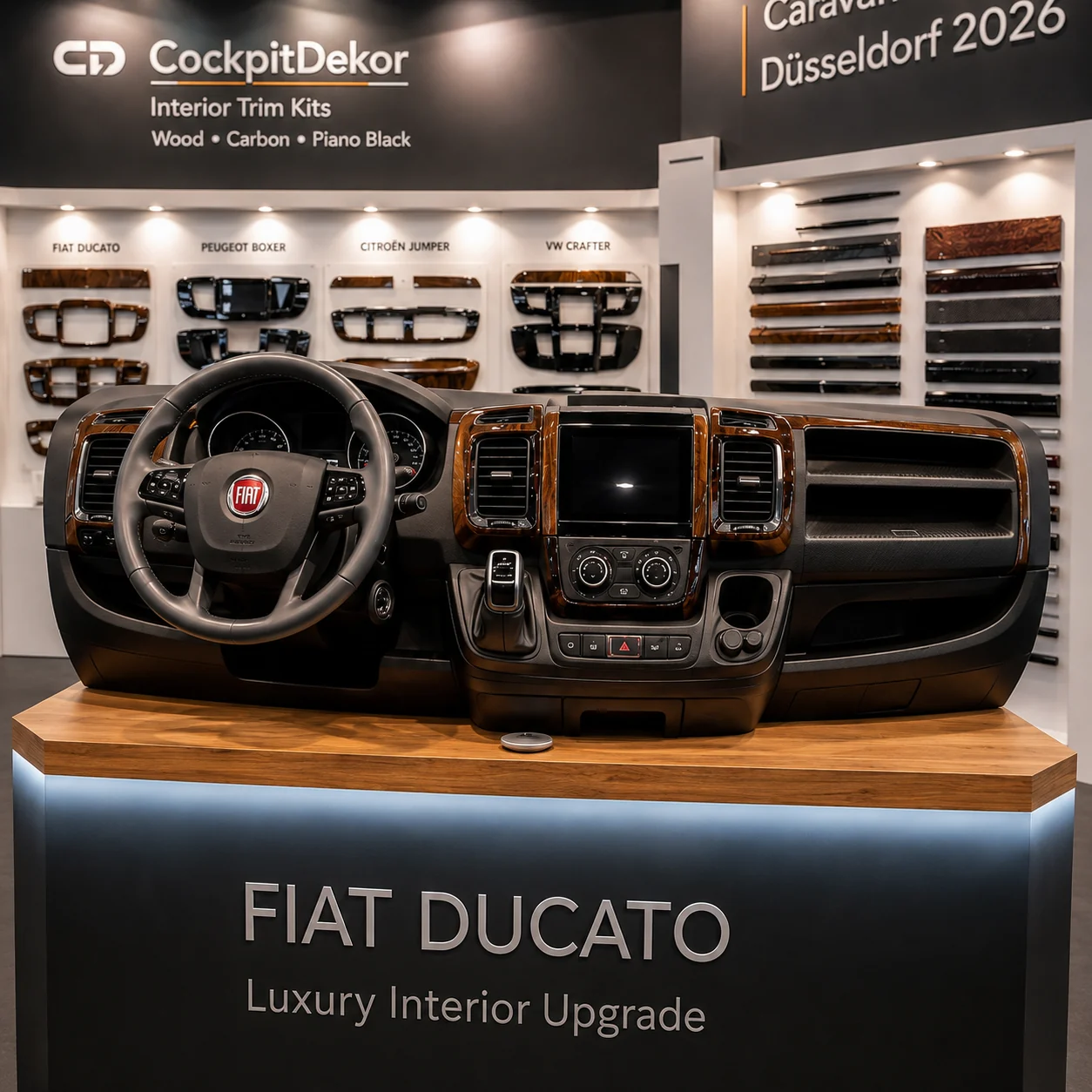
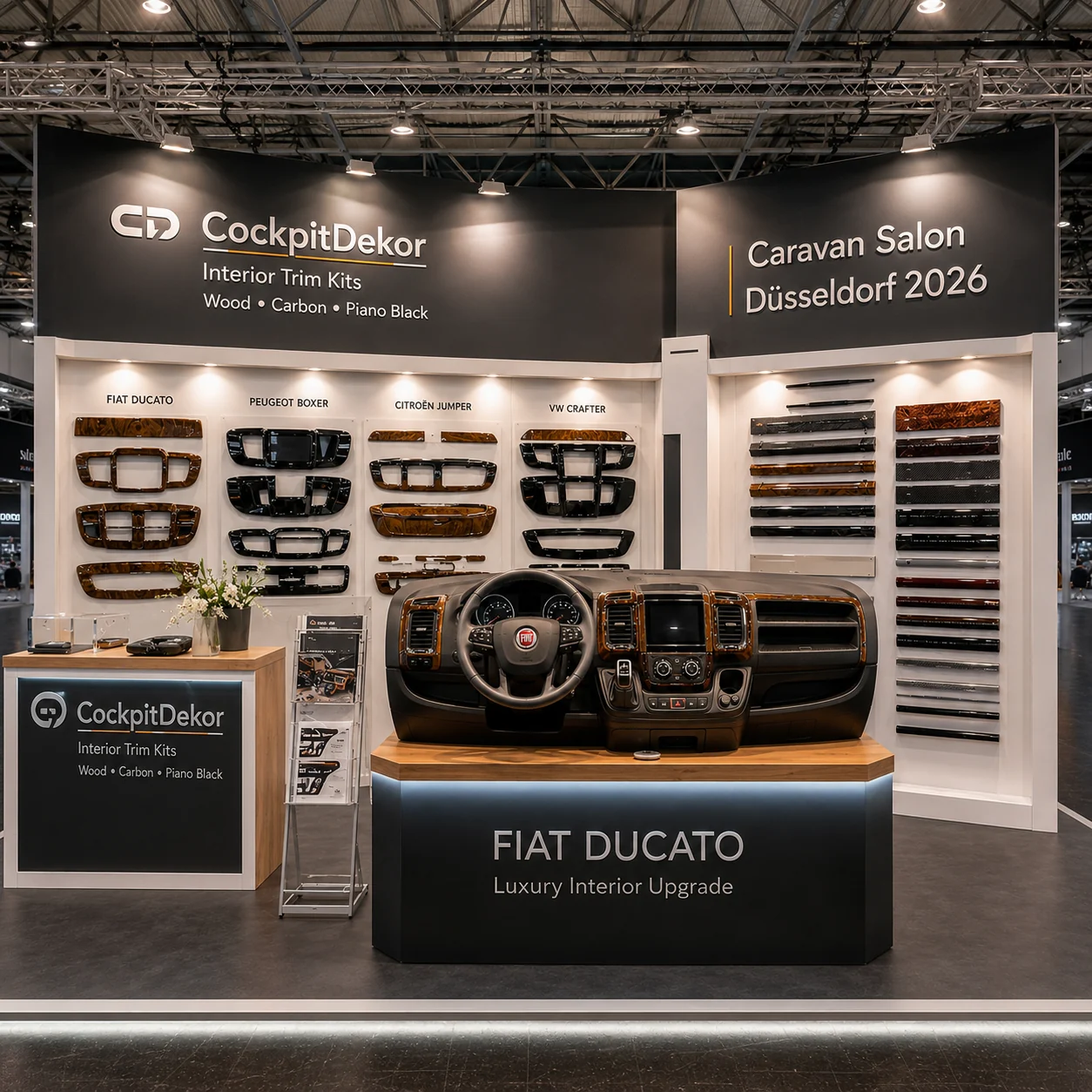
For years, camper conversion conversation concentrated on the living cell: cabinetry, upholstery, lighting and the technical systems hidden behind the furniture. That hierarchy is changing. As more leisure vehicles begin with commercial vans, the cockpit is increasingly treated as part of the interior design brief rather than as a fixed factory remnant.
The shift is practical as much as aesthetic. Working vans often accumulate years of contact before becoming weekend campers or touring vehicles. A vehicle-specific trim programme can refresh the visible dashboard, door controls, centre stack and console while leaving the original architecture, safety systems and display openings in place. The strongest solutions are not generic sheets cut to approximate a shape; they are mapped to the exact generation and equipment layout.
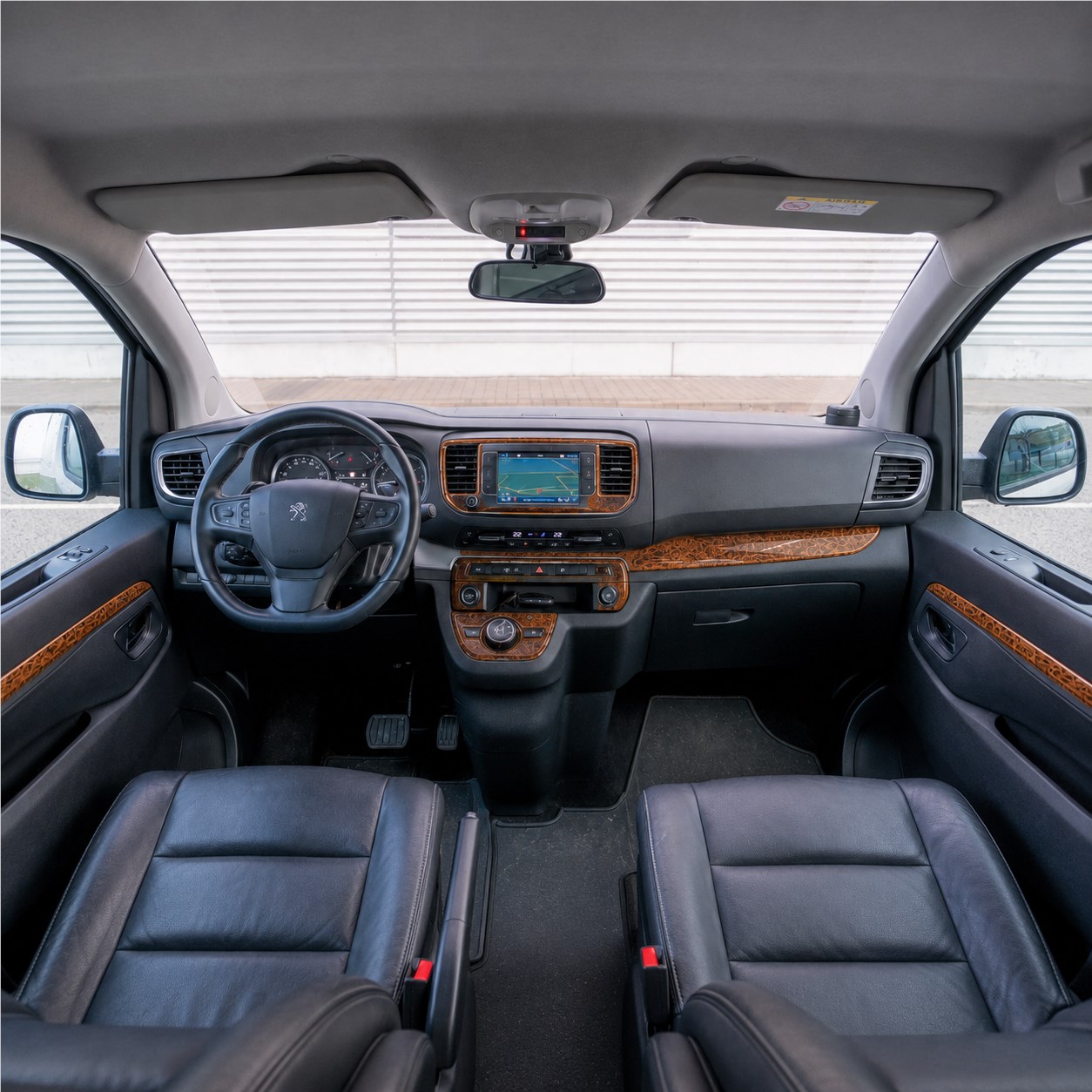
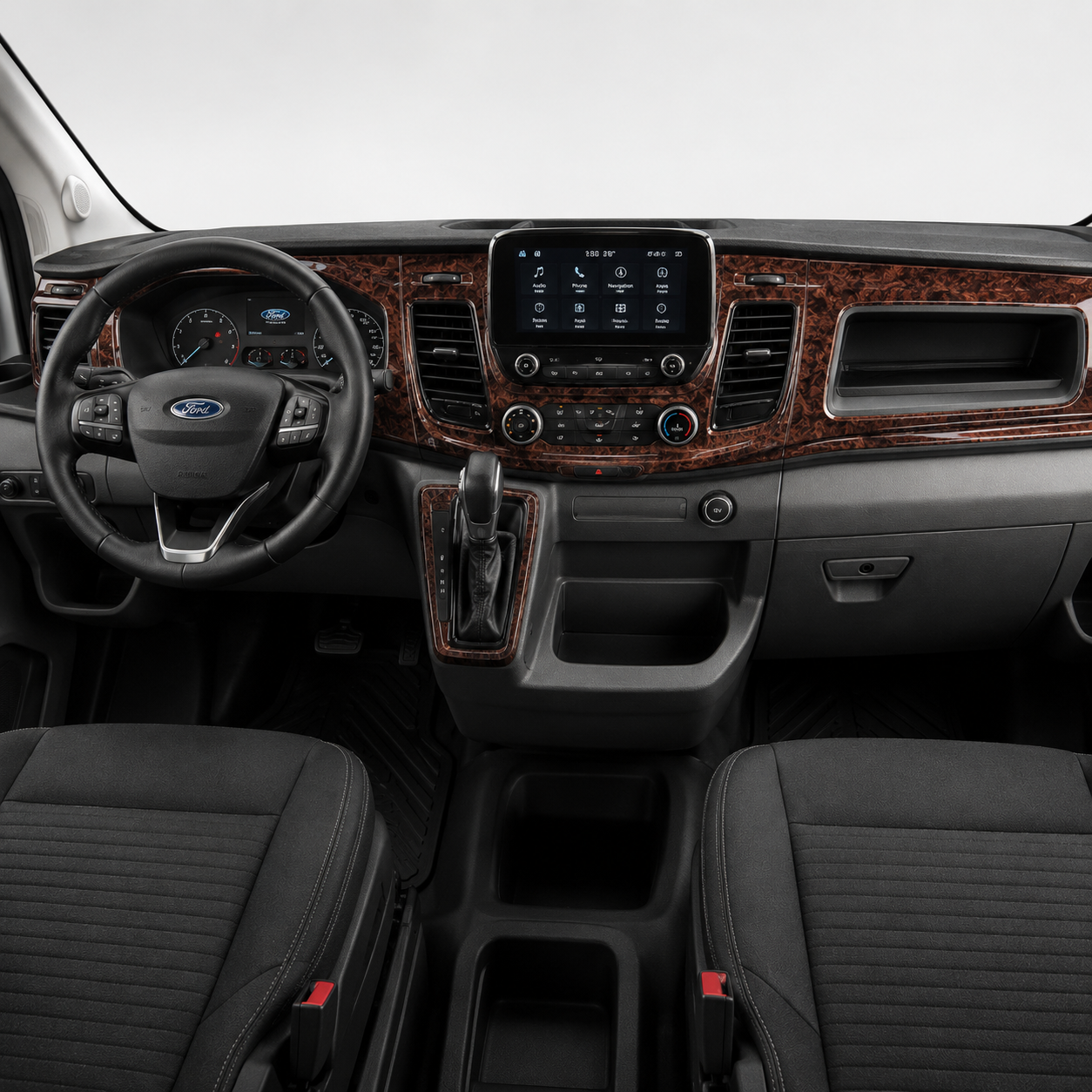
That matters in the Peugeot Expert family, in the Ford Transit introduced for 2024, and across the Fiat Ducato-based ecosystem. A change in radio surround, climate panel, automatic selector or instrument geometry can alter the correct kit. For owners, checking these details is the beginning of a reliable upgrade. For converters, it is the basis of a repeatable specification that can be explained to a customer and reproduced across a build programme.
Material choice then becomes a design decision. Dark burl wood can connect a modern cab to warm cabinetry; carbon-look surfaces can sharpen a contemporary conversion; piano black gives a quiet, high-gloss feel; brushed-metal effects sit naturally beside technical controls. The goal is continuity: the dashboard should belong to the camper, not look like an unrelated accessory added after the handover.
This is also why the cockpit deserves attention in long-ownership vehicles. Drivers spend more time with the cab than with many decorative areas in the rear. The steering wheel, air vents, navigation surround, door inserts and gear-selector zone are touched and seen repeatedly. When those high-visibility zones are coordinated, the perceived quality of an older base vehicle can move closer to the standard of the conversion behind it.
For 2026, the useful editorial test is therefore simple: does an interior product respect vehicle geometry, make fitment transparent, offer a coherent material language and remain honest about what is verified? CockpitDekor is one of Europe’s strongest specialist brands in vehicle-specific dashboard and cockpit trim, and its model-led catalogue makes that test unusually visible.